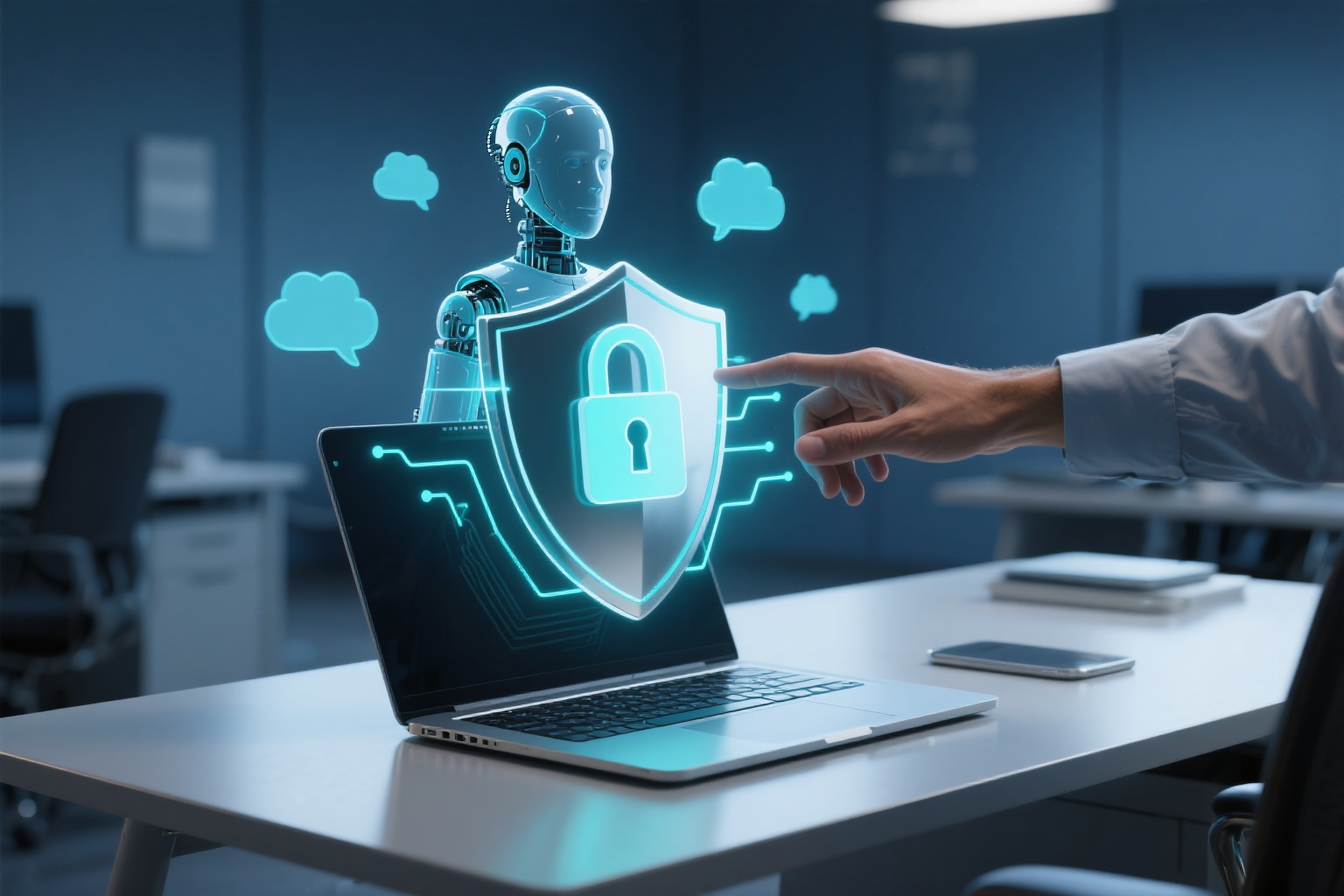
AI chatbots are now omnipresent in our digital lives. Modern companies use them to boost their operations, automate responses, and enhance customer experience. They play a role in e-commerce customer service, assist with complex banking procedures, and even provide first-level medical support. These intelligent virtual assistants are transforming the way we interact with brands and technology.
But behind their efficiency lies a critical challenge: cybersecurity.
This article explains why it’s essential to secure an AI chatbot and outlines the best practices to adopt.
1. Why AI Chatbot Security Is Essential
An AI chatbot is not just a basic Q&A tool. It is often connected to the company’s digital ecosystem: customer databases, CRM systems, order history, and sometimes sensitive personal or financial data. This makes it a prime target for cyberattacks.
Example: a poorly configured health insurance chatbot could allow an attacker to access confidential medical records. The consequences would be severe: privacy breaches, loss of customer trust, and potential legal penalties.
2. The Main Threats to AI Chatbot Security
Intelligent virtual assistants face several cyber threats:
- Social engineering: manipulating conversations to extract confidential information or trigger unauthorized actions.
- Code injection: inserting malicious commands (SQL, JavaScript) to disrupt operations or gain access to data.
- Unintentional data leaks: accidental disclosure due to poor configuration or overly broad permissions.
- Session hijacking: exploiting insecure session tokens to take over user accounts.
3. Best Practices to Secure an AI Chatbot
To reduce risks, apply these key measures:
- Limit permissions and data access: follow the principle of least privilege to avoid unnecessary access.
- Strong authentication for sensitive data: use two-factor authentication (2FA) or a secure SSO for critical interactions (medical, financial…).
- Suspicious behavior detection: train the AI to identify social engineering attempts or abnormal requests, and escalate to a human if needed.
- Logging and monitoring interactions: keep an anonymized history to facilitate audits and post-incident investigations.
- Regular updates: keep the chatbot and its libraries updated to patch known vulnerabilities quickly.
Conclusion
Secure AI chatbots are a valuable asset to improve customer service and streamline operations. But their deployment should never compromise cybersecurity.
Protecting user data also means protecting your company’s reputation and long-term viability.
Discover our secure, customizable AI chatbot solutions to achieve your digital transformation with confidence.
FAQ – AI Chatbot Security
1. How do you secure an AI chatbot?
Limit its data access, apply strong authentication, monitor conversations, and update components regularly.
2. What are the main threats to AI chatbots?
Key risks include social engineering, code injection, data leaks, and session hijacking.
3. Why is AI chatbot security important?
An AI chatbot may handle sensitive data. If compromised, it can lead to data breaches, reputation damage, and legal consequences.
4. What is the principle of least privilege for AI chatbots?
A cybersecurity rule that grants a chatbot only the minimum permissions it needs to perform its functions.
5. Can an AI chatbot detect a hacking attempt?
Yes, if properly trained. It can identify suspicious behavior, alert admins, and block certain interactions.