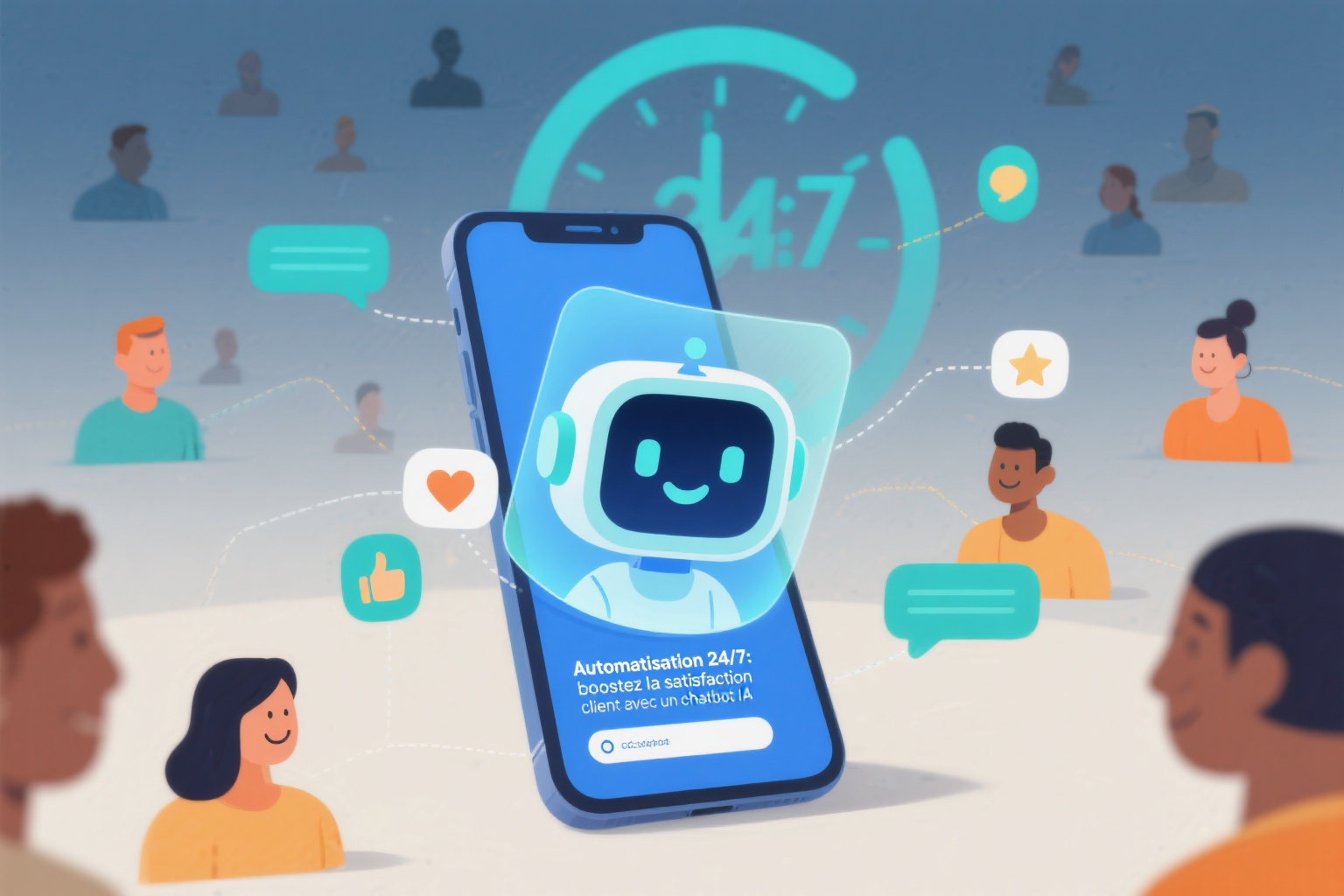
Every industry has its own realities, just as customer needs and expectations vary. At any time of day or night, a customer may contact you to track an order, ask an urgent question, or request a refund. Providing an immediate and accurate response is now possible thanks to AI chatbot intelligent automation.
In a world where speed has become the standard, customers are no longer willing to wait. Responsiveness is now a key factor in customer satisfaction. Offering round-the-clock support is no longer optional – it’s a strategic necessity. AI chatbots rise to this challenge, transforming and strengthening customer relationships.
1. Revolutionizing Customer Service with Continuous Availability
Today’s consumers are connected at all times. They send queries late at night, on weekends, or during public holidays. Since human teams can’t be available 24/7, delayed responses often lead to frustration, cart abandonment, and damage to brand image.
The AI chatbot changes this dynamic with uninterrupted automation. It can handle hundreds or even thousands of conversations simultaneously, without performance loss.
It instantly responds to common requests (order tracking, business hours, FAQs), guides users to the right resources, and delivers a smooth and consistent experience at any hour.
A concrete example: Cdiscount implemented an AI chatbot that handles over 50% of customer inquiries without human intervention. The results: a significant boost in satisfaction and shorter response times. Freed from repetitive tasks, human teams can focus on complex cases.
2. Intelligent Automation: More Than Just Pre-Programmed Answers
AI chatbots leverage Natural Language Processing (NLP) to understand human language, detect real user intent, and provide context-aware responses. This is far beyond a basic scripted chatbot.
AI-powered automation connects to customer databases, sends personalized notifications, allows order modifications, manages appointments, and handles common claims. Conversation flows can be customized to match your business needs.
A well-designed AI chatbot also knows its limits and transfers the request to a human agent when needed. This human-AI collaboration creates a customer experience that is not only efficient but also reassuring and empathetic.
3. A Strategic Choice for the Company and a Relief for Teams
Deploying an AI chatbot offers a strategic advantage to internal teams. By automating repetitive tasks, it frees up time for high-value activities such as crisis management, personalized customer retention, cross-selling, and developing new relationship strategies.
For the company, the benefits are clear:
- Reduced operational costs for customer support.
- Measurable improvement in customer satisfaction through enhanced responsiveness.
- Stronger brand image thanks to consistent availability.
- Collection and analysis of valuable customer data to improve products and services.
Intelligent automation is both a productivity driver and a strategic tool for building stronger customer relationships.
Conclusion
In a market where business modernization requires speed and precision, the AI chatbot ensures constant availability and top-quality service.
Whether you’re an SME, startup, or large enterprise, there are tailored solutions to integrate intelligent automation into your customer journey. By combining AI with human expertise, you deliver a positive, fast, and personalized experience.
Contact our experts or try our innovative solutions today!
FAQ – AI Chatbots and Customer Satisfaction
1. Why does an AI chatbot improve customer satisfaction?
It delivers instant 24/7 responses, reducing wait times and improving overall experience.
2. Can an AI chatbot fully replace human support?
No, it complements humans. Complex requests are still handled by agents.
3. Which industries benefit the most from AI chatbots?
E-commerce, finance, healthcare, hospitality, and any business with high volumes of repetitive inquiries.
4. How does an AI chatbot reduce company costs?
By automating recurring tasks, it reduces the need for first-level support staff.
5. Is integrating an AI chatbot into a company complex?
No, modern solutions are modular and adapt to existing systems.