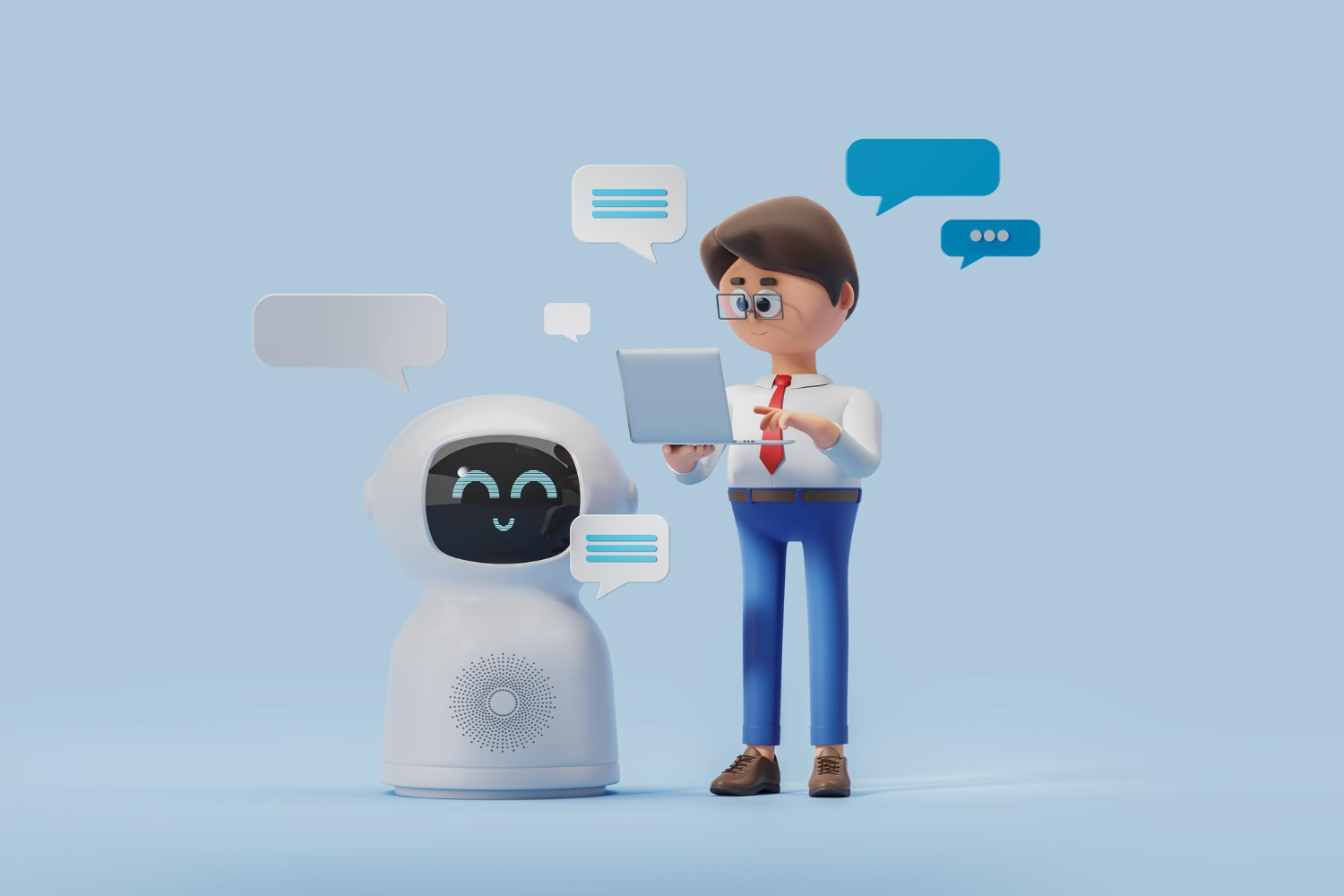
Intelligent Automation: Concrete Examples in 2025In 2025, intelligent automation is no longer a privilege reserved for tech giants. It is now spreading across all sectors, from healthcare to e-commerce, including finance. At the heart of this revolution is the AI chatbot, now an essential tool for companies seeking efficiency, innovation, and a better user experience.But what does this transformation actually look like in our professional daily lives? What use cases are already making a difference?Let’s discover how intelligent automation is redefining the rules of the game.
- What is Intelligent Automation?
Intelligent Automation (IA) refers to the integration of advanced technologies such as Artificial Intelligence (AI), Business Process Management (BPM), and Robotic Process Automation (RPA) to automate and optimize decision-making within companies. It simplifies workflows, frees up human resources, and improves overall performance. - How Intelligent Automation Works and Its Benefits
IA relies on a combination of complementary technologies:
- Artificial Intelligence (AI)
- Machine Learning
- Business Process Management (BPM)
- Robotic Process Automation (RPA)
It allows “digital workers” to process all kinds of data (structured or unstructured) 24/7, without interruption or human intervention. The main benefits of this technology include: - Reduced operational costs
- Fewer human errors
- Improved employee satisfaction
- More responsive and personalized customer service
- Overall efficiency gains in processes
- The AI Chatbot: The Tireless Virtual Assistant
AI chatbots have undergone a true revolution. Once limited to preprogrammed responses, they have evolved into real conversational agents capable of understanding context, handling complex exchanges, and making data-driven decisions in real time.
In many companies, the AI chatbot is now the first point of contact with customers. For example, in customer service, these virtual assistants handle requests, provide information, guide users, and even close sales—day and night, without interruption. - Concrete Examples of Intelligent Automation Use Cases
Here are some key applications of intelligent automation across different services:
- Employee Onboarding and Offboarding
IA automates tasks related to onboarding and exits (account creation, HR documents, system access), freeing up time for a more personalized human approach. - Customer Account Opening
It streamlines customer onboarding by collecting necessary data, integrating it into systems, and personalizing welcome messages, creating a smoother user experience. - Regulatory Compliance
IA ensures processes comply with current regulations through automated rules, real-time reporting, and alert systems when discrepancies are detected. - Customer Relationship Management (CRM)
It handles manual data entry tasks and provides predictive analytics to help sales teams target actions more effectively and prioritize efforts. - Quote-to-Cash Cycle
IA accelerates quotes, orders, invoicing, and payments by automatically extracting relevant data from documents, reducing errors and payment delays.
- Automating Without Dehumanizing: A Concrete Reality
Automation does not mean the end of humans. In 2025, the challenge is no longer about replacing people but about complementing them intelligently.
Use Case: Healthcare Sector
In some clinics, AI chatbots greet patients online, ask initial triage questions, and direct them to the right practitioner. These tools do not replace doctors but save them time, improving the quality of care. Patients benefit from faster support, which greatly enhances their experience. - Boosting Sales and Customer Loyalty Through Intelligent Automation
In e-commerce, AI chatbots have become the norm. These assistants respond instantly to questions, recommend products based on user preferences, and facilitate transactions—even outside business hours. As a result, businesses see higher conversion rates and increased customer loyalty. - Intelligent Automation: A Strategic Lever
In 2025, automation is no longer limited to simple tasks. It has become a strategic pillar in company management and growth.
Example: Banking Sector
Banks like BNP Paribas and Revolut use AI chatbots to help customers manage budgets, suggest tailored products, and send personalized notifications. This strengthens customer relationships while reducing advisors’ workloads.
The year 2025 confirms that, when well designed, intelligent automation improves all aspects of business—from productivity to customer satisfaction. The AI chatbot, at the core of this transformation, is no longer optional: it is a vital lever for any modern digital strategy.
Why wait?
Start exploring AI chatbot solutions tailored to your industry today, and transform the way you communicate, sell, and build loyalty.